
The Science of Rejuvenation
Targeting the cellular root of aging, while rewriting the story behind it.
Powered by Senolytics and Neurocosmetics
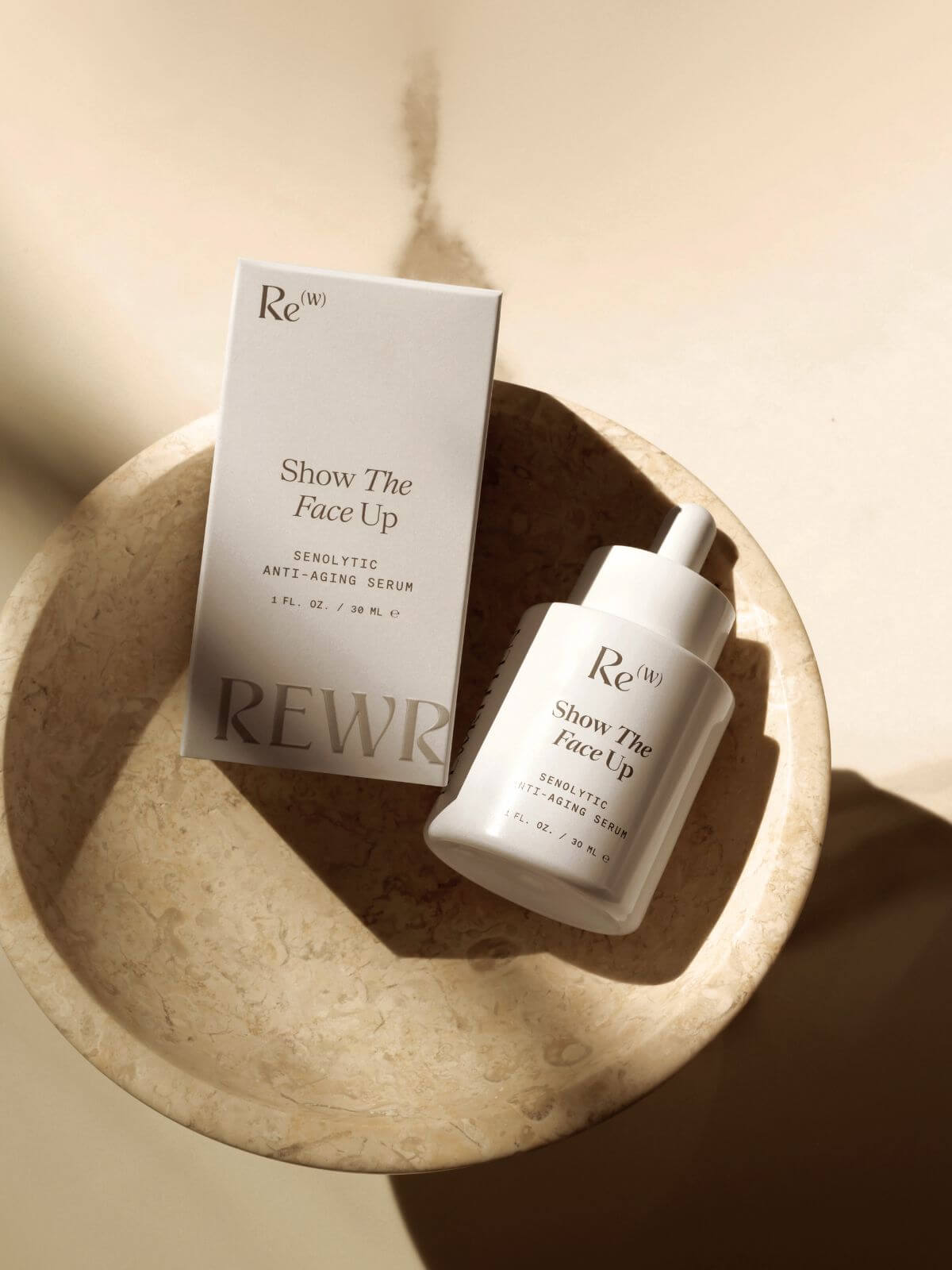
Our hero serum, Show The Face Up, is powered by Alpine Rose Active, the first cosmetic ingredient with clinically proven senolytic activity. It helps reduce the buildup of age-promoting "zombie cells" while supporting healthy cell renewal for skin that looks fresher and smoother.
Combined with Neurophroline - a breakthrough neurocosmetic that targets the visible effects of stress on skin by reducing cortisol production and boosting calming beta-endorphins - so skin looks calmer, stronger, and more radiant.
Together, they go beyond the surface to target the visible signs of aging where they begin.
This breakthrough approach drives results across the Five Pathways of Cellular Renewal.
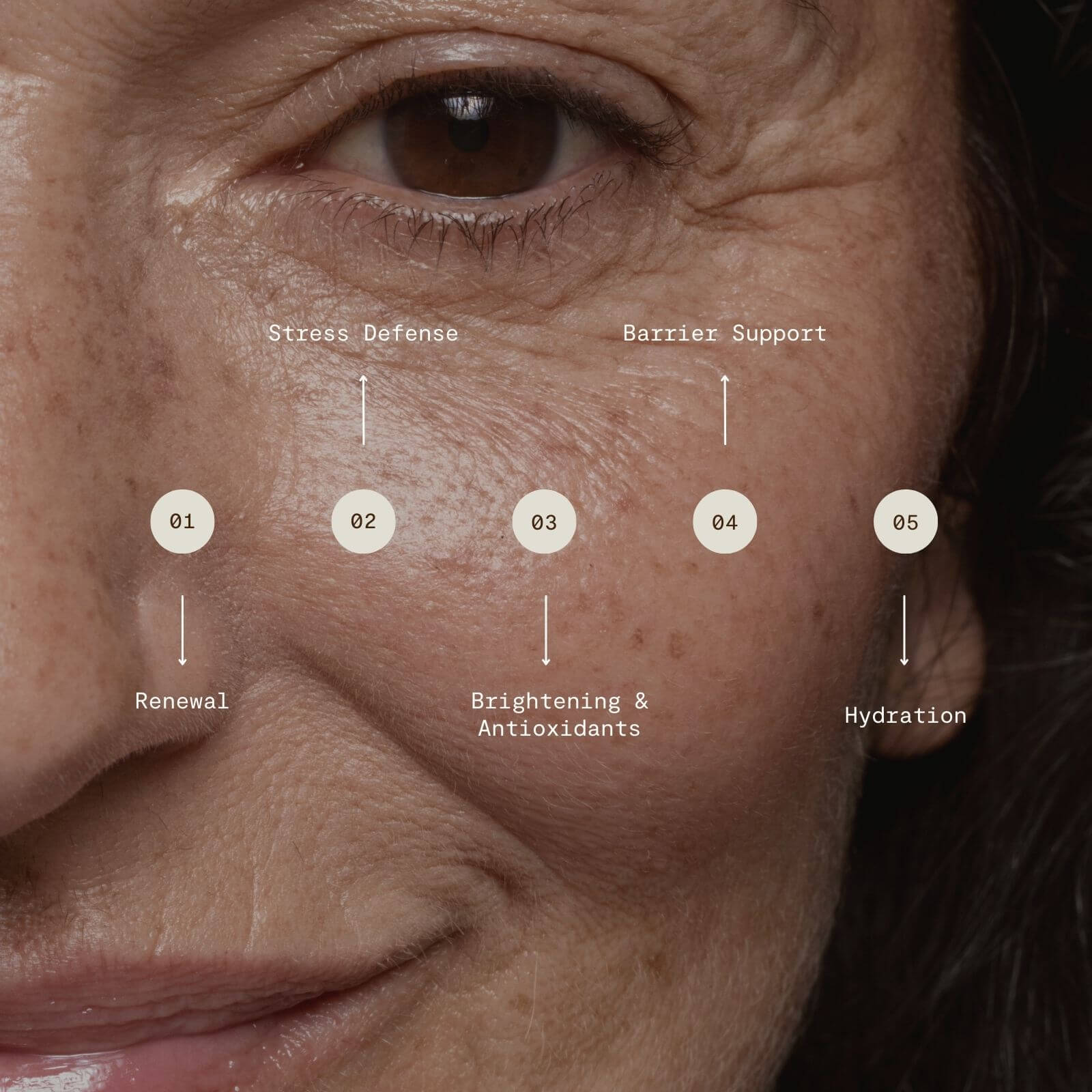
5 Pathways of Cellular Renewal
1. Renewal: Eliminating Cellular "Zombie" Cells
Alpine Rose Active supports the skin's natural renewal process, helping reduce the accumulation of "zombie cells" for fresher, smoother-looking skin and visibly softer lines and wrinkles.
Clinical Evidence:
- Clinical studies show up to 16.1% increase in skin elasticity
- Reduced senescent cells from 28.1% to 10.1% of total cell population in laboratory studies
- Performance comparable to pharmaceutical senolytic Navitoclax (medical-grade anti-aging drug)
- Double-blind clinical trial (44 women, ages 40-65): 16.1% increase in skin elasticity after 28 days
- 8.4% reduction in skin redness after just 14 days of twice-daily application
Mechanism: Alpine Rose Active represents the first translation of medical senolytic research into topical skincare. This breakthrough ingredient targets senescent cells - damaged cells that stop functioning but refuse to die, continuously secreting inflammatory molecules that accelerate aging. Contains four specific flavonoid compounds (hyperoside, naringenin, farrerol, and taxifolin) that work by targeting the Bcl-2 protein pathway, allowing zombie cells to finally undergo natural death while preserving and helping regenerate healthy cells.
Sources: MDPI Peer-Reviewed Study, Cosmacon Industry Analysis, Mibelle Biochemistry Clinical Studies
2. Stress Defense: Neurocosmetic Innovation
As a breakthrough in neurocosmetics, Neurophroline helps counter the visible effects of stress on skin, including those associated with cortisol. The result is skin that looks calmer, more balanced, and refreshed.
Clinical Evidence:
- 70% reduction in cortisol production by skin cells within 2 hours (in vitro)
- 163% increase in beta-endorphin production within 24 hours (natural calming neuropeptides)
- Clinical study on 24 women in polluted environment: Significant reduction in tired appearance, fewer dark circles, improved skin tone and brightness after one month
- Reduces skin redness significantly after 28 days of regular use
Mechanism: Neurophroline is derived from Tephrosia purpurea (wild indigo plant), used in Ayurvedic tradition for its skin-calming benefits. This neurocosmetic works through the neuro-immuno-cutaneous system (NICS) - the skin-brain connection that allows stress to directly impact skin health. Neurophroline inhibits cortisol production in keratinocytes while stimulating the release of beta-endorphins (natural "happiness" peptides) and boosting antioxidant enzymes HMOX1 (up to 3000%) and NQO1 (200%) for cellular protection.
Sources: MDPI Neurocosmetics Review, PMC Well-Aging Study, Givaudan Clinical Studies
3. Brightening & Antioxidants: Multi-Pathway Protection
Vitamin C (THD Ascorbate), Ferulic Acid, and Vitamin E work together to visibly brighten, even tone, and improve the look of dark spots, while helping defend against oxidative stress.
Clinical Evidence:
- THD Ascorbate penetrates 3x better than L-Ascorbic Acid and shows 110% greater penetration after 6 hours, 150% after 24 hours compared to 20% AA formulation
- Reduces melanin synthesis by more than 80% in human melanoma cell cultures
- Collagen-boosting effects demonstrated at just 0.1% concentration
- Ferulic acid doubles photoprotection from 4-fold to approximately 8-fold against solar-simulated irradiation
- 30% THD ascorbate formulation showed clinical improvements in photodamaged and hyperpigmented skin after 12 weeks
Mechanism: THD Ascorbate is a stable, lipophilic form of Vitamin C that penetrates deeper than traditional L-ascorbic acid. Ferulic Acid stabilizes and enhances the efficacy of vitamins C and E by up to 8-fold. This combined antioxidant network prevents the formation of new senescent cells from UV and pollution damage.
Sources: PMC Tetrahexyldecyl Ascorbate Study, Journal of American Academy of Dermatology, Journal of Drugs in Dermatology
4. Barrier Support: Comprehensive Skin Health
Niacinamide and nutrient-rich oils (argan, jojoba, prickly pear, squalane) support the skin's natural barrier, visibly reduce the look of redness, and smooth texture for skin that looks healthier and more resilient.
Clinical Evidence:
- 2% niacinamide significantly reduced sebum excretion rate and pore size in clinical studies
- 4% niacinamide improved pores, roughness, and skin unevenness after 8 weeks
- 5% niacinamide showed improvement in fine lines, wrinkles, hyperpigmented spots, texture, red blotchiness, and sallowness after 12 weeks in double-blind study
- Clinical studies report that 2% to 5% niacinamide can effectively reduce sebum production
- Niacinamide-containing moisturizer improved stratum corneum barrier function in subjects with rosacea after 4 weeks
Mechanism: Niacinamide supports skin barrier function by upregulating ceramide synthesis and stimulating keratinocyte differentiation. It reduces inflammation, regulates sebum production, strengthens skin barrier function, and supports cellular energy metabolism.
Sources: PMC Niacinamide Clinical Evidence, PubMed Sebum Reduction Study, PMC Multi-functional Niacinamide Review
5. Hydration: Deep Cellular Moisture
Hyaluronic Acid delivers deep, lasting hydration that visibly plumps, smooths, and restores a radiant glow.
Clinical Evidence:
- 134% immediate increase in skin hydration after application, with sustained 55% increase at week 6
- Clinical improvements after 6 weeks: 64% smoothness, 60% plumping, 63% hydration, 31% fine lines reduction
- 130 kDa molecular weight HA increased skin elasticity by 20% and significantly improved wrinkle depth after 60 days
- Multi-weight HA formulations increased skin moisture by up to 96% after one application
- HA between 50-1,000 kDa is most beneficial for skin, with 130 kDa being optimal according to human studies
Mechanism: Multi-weight molecular hyaluronic acid penetrates different skin layers - high molecular weight HA hydrates the surface while low molecular weight HA penetrates deeper into the epidermis. This provides both immediate plumping and long-term moisture retention for visibly smoother, more radiant skin.
Sources: PMC Hyaluronic Acid Efficacy Study, PubMed Molecular Weight Analysis, Journal of Clinical and Aesthetic Dermatology
Why Neurocosmetics Matter: The Skin-Brain Connection
Traditional skincare focuses on surface symptoms. Neurocosmetics target the root cause: the neuro-immuno-cutaneous system (NICS) - the complex communication network between your skin, nervous system, and immune system.
The Science:
Stress triggers cortisol production directly in skin cells, leading to:
- Breakdown of collagen and elastin
- Increased inflammation and redness
- Impaired barrier function and moisture loss
- Acceleration of cellular senescence
The Rewritten Solution:
Neurophroline interrupts this stress cascade by:
- Blocking cortisol production at the cellular level
- Boosting beta-endorphins for natural calming effects
- Enhancing antioxidant defenses against environmental damage
- Supporting skin's natural repair mechanisms
Source: Neurocosmetics Research Review
The Revolutionary Science: Senolytics in Skincare
Cellular senescence is now recognized as one of the 12 Hallmarks of Aging - the fundamental biological processes that drive aging at the molecular level. Senescent "zombie" cells:
- Stop dividing but refuse to die
- Secrete inflammatory molecules that damage surrounding healthy cells
- Create a "bystander effect" turning healthy cells senescent
- Accumulate over time, accelerating visible aging
Alpine Rose Active is the first cosmetic ingredient with proven senolytic activity, offering:
- Selective elimination of damaged cells while preserving healthy tissue
- Prevention of bystander senescence - stopping the spread of cellular aging
- Restoration of healthy cellular communication for improved skin function
- Complete UV protection against protein carbonylation (a key aging trigger)
Source: Peer-Reviewed Senolytic Research

Clinical Validation: Real Results, Measurable Science
Double-Blind, Placebo-Controlled Studies:
- 44 women, ages 40-65 (Alpine Rose Active)
- 24 women in polluted environment (Neurophroline)
- 21 women, 28-day clinical study (Tephrosia purpurea)
Objective Measurements:
- Spectrocolorimeter for redness and brightness
- Cutometer for elasticity and firmness
- Visia imaging system for visual documentation
- Biochemical analysis of cortisol and beta-endorphin levels
Statistically Significant Results:
- All improvements were significant vs. both baseline and placebo
- Effects visible within 2 hours, progressive benefits over 28 days
- No adverse reactions reported in any clinical studies
The Future of Skincare: Beyond Anti-Aging
A Shift From Tradition to The Future
Rewritten represents a fundamental shift from traditional "anti-aging" to senolytic skincare - addressing the actual biological mechanisms of aging rather than just masking symptoms.
Traditional Approach:
- Stimulates collagen production temporarily
- Masks surface signs of aging
- Requires continuous escalation of active concentrations
Senolytic Approach:
- Eliminates the cellular sources of aging
- Restores natural skin function
- Creates cumulative, long-term improvements
This isn't just advanced skincare - it's the translation of cutting-edge longevity research into daily beauty rituals.
Rewritten is high-performance skincare backed by science, designed for real results you can see and feel.
Frequently Asked Questions
Senolytic Skincare FAQs
Senolytic skincare is a new category of anti-aging products that target senescent cells - also called "zombie cells" - in the skin. These are damaged cells that have stopped functioning normally but refuse to die, releasing inflammatory compounds that accelerate aging in surrounding healthy cells. Senolytic ingredients selectively clear these zombie cells while leaving healthy cells intact, addressing aging at its cellular source rather than just treating surface symptoms.
Zombie cells (scientifically called senescent cells) are damaged skin cells that have stopped dividing but won't die naturally. They accumulate in your skin over time and continuously release inflammatory molecules called SASP (Senescence-Associated Secretory Phenotype). These molecules break down collagen, trigger inflammation, and can even convert healthy neighboring cells into zombie cells, creating a cascade that accelerates visible aging including wrinkles, loss of elasticity, and uneven texture.
Yes, topical senolytic skincare ingredients like Alpine Rose Active have been tested in clinical studies with no significant adverse effects reported. Unlike oral senolytic drugs used in medical research, topical application delivers targeted benefits directly to the skin without systemic effects. The ingredients selectively target only damaged senescent cells while leaving healthy cells completely unaffected. As with any new skincare active, patch testing is recommended for those with sensitive skin.
Clinical studies show measurable improvements within 28 days, including a 16.1% increase in skin elasticity and reduction of senescent cells from 28.1% to 10.1% of the cell population. Many users notice softer, more refined skin texture within the first 2-3 weeks. For optimal results, consistent daily use for 2-3 months is recommended, as clearing accumulated zombie cells and allowing healthy tissue to regenerate is a gradual process.
Retinol and senolytics work through completely different mechanisms. Retinol accelerates the turnover of ALL cells, pushing them through their lifecycle faster to bring fresh cells to the surface. Still, it doesn't specifically target damaged cells and can cause irritation. Senolytics selectively identify and eliminate ONLY zombie cells (senescent cells) while leaving healthy cells untouched. This targeted approach addresses the root cause of cellular aging without the irritation profile of retinoids. Many people use both for complementary benefits.
Yes, senolytics and retinol can be used together effectively since they work through different pathways. A common approach is to use senolytic products in the morning and retinol at night, or to alternate days. Senolytics clear accumulated cellular damage (zombie cells) while retinol speeds the renewal of healthy cells, together they address aging from two complementary angles. There are no known interactions between topical senolytic ingredients and retinoids.
Senolytic skincare is particularly beneficial for:
- Women over 40 (when senescent cell accumulation accelerates significantly)
- Those with high-stress lifestyles (stress increases zombie cell formation)
- Women in perimenopause or menopause (hormonal changes accelerate cellular aging)
- Anyone recovering from skin procedures like laser treatments
- Those who can't tolerate retinol but want effective anti-aging results
It's suitable for all ages and skin types and works well in combination with most other skincare actives.
Science & Mechanism FAQs
Senescent cells cause skin aging through a process called SASP (Senescence-Associated Secretory Phenotype). These zombie cells release up to 80+ different inflammatory molecules that break down collagen and elastin, disrupt the skin barrier, and trigger inflammatory responses. Even worse, they can convert neighboring healthy cells into senescent cells, creating a cascading effect. Research shows that by age 60, up to 30% of your skin cells may be senescent, essentially creating a continuous inflammation factory in your skin.
Zombie cells form from several triggers: UV damage (the #1 cause), chronic stress and elevated cortisol, hormonal changes during perimenopause/menopause, environmental pollution and free radical exposure, and natural cellular aging. While some senescent cell formation is normal, the accumulation accelerates with age because your body's natural clearing mechanisms (autophagy) slow down. This is why senolytic skincare becomes increasingly important as we age, to help clear what your body can no longer eliminate efficiently.
Alpine Rose Active is a plant-derived senolytic ingredient extracted from stem cells of Alpine Rose (Rhododendron ferrugineum), a resilient plant that survives extreme conditions in the Swiss Alps. Studies show it can reduce senescent cells by up to 64% in 28 days while increasing skin elasticity by 16.1%. The ingredient works by activating cellular cleanup mechanisms (autophagy) and selectively targeting stressed cells for removal. It's also a potent antioxidant that protects against environmental stressors that create new zombie cells.
Yes. Chronic stress creates zombie cells through multiple pathways. Elevated cortisol (the stress hormone) directly damages cellular DNA and accelerates the formation of senescent cells. Stress also generates oxidative stress and inflammation, both of which trigger cellular senescence. Studies show that women with high chronic stress have measurably older-looking skin at the cellular level, with higher concentrations of senescent cells and increased inflammatory markers. This is why stress management is increasingly recognized as essential to any effective anti-aging strategy.
Traditional anti-aging skincare treats symptoms (wrinkles, dullness, texture) but doesn't address the cellular source of aging. Ingredients like peptides, hyaluronic acid, and even retinol work by stimulating production of new components or accelerating cell turnover - but they don't remove the damaged cells that are actively sabotaging your skin's regeneration. Senolytic skincare is fundamentally different because it eliminates the source of cellular damage rather than just compensating for it. Think of it as removing the weeds rather than just planting more flowers.
Yes, Rewritten Beauty products are vegan and cruelty-free. Our ingredients are derived from plant sources including Alpine Rose stem cells and Wild Indigo extract. We do not test on animals and do not use animal-derived ingredients.
Scientific References
- Alpine Rose Senolytic Research: MDPI Cosmetics Journal - Peer-reviewed analysis of senolytic mechanisms
- Neurocosmetics Review: MDPI Cosmetics Journal - Comprehensive review of skin-brain connection
- Tephrosia Purpurea Clinical Study: PMC Well-Aging Research - Clinical validation of stress-reduction benefits
- Senolytic Industry Analysis: Cosmacon Technical Review - Industry analysis of zombie cell targeting
- Mibelle Biochemistry: Alpine Rose Active clinical documentation and technical specifications
- Givaudan Active Beauty: Neurophroline clinical studies and mechanism research